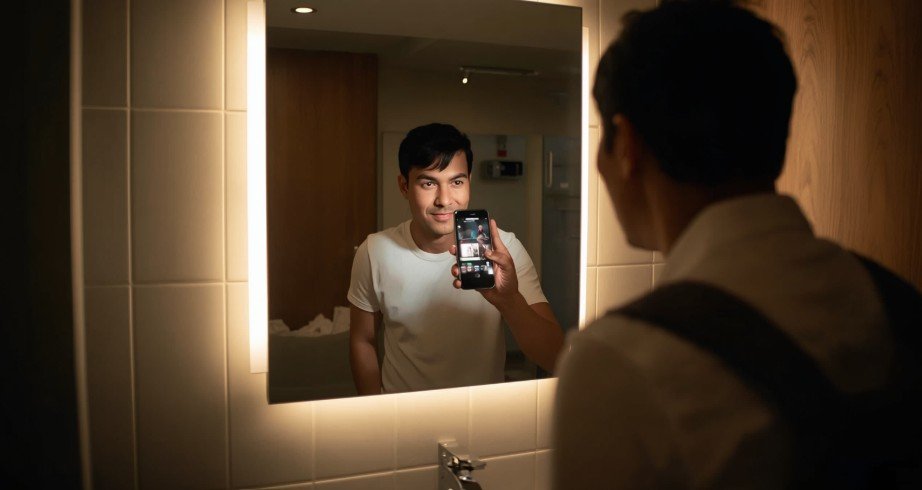
A quiet hotel bathroom can still make me do a quick double-take. That is why what is the mirror trick in hotels has become such a popular travel safety question. It is quick and a little dramatic.
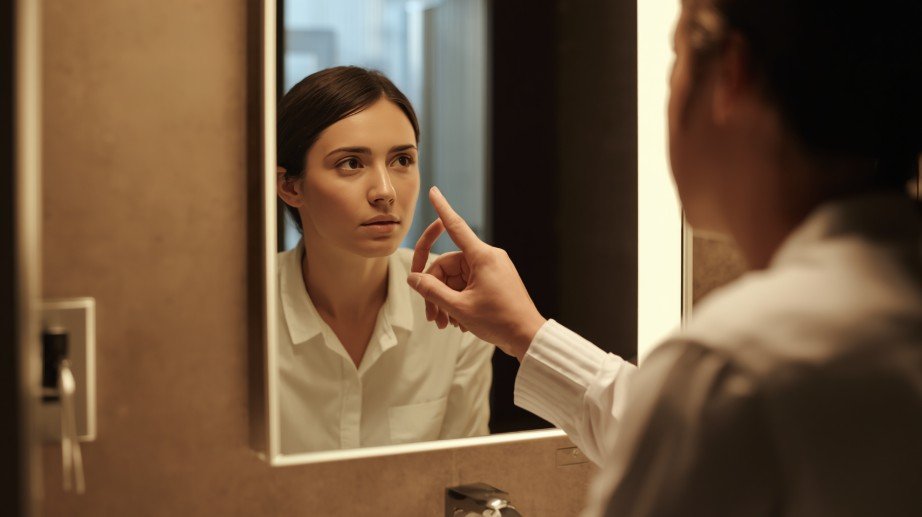
The mirror trick usually means checking whether a hotel bathroom mirror is a normal mirror or a two-way mirror. The shared method is the fingernail test, where you press your fingertip to the glass and look for a gap between your nail and its reflection.
It is a smart first check. For solo guests, couples, families, and business travelers, this habit supports privacy and peace of mind.
Key Takeaways
- One: Check mirrors, not moods.
- Two: The fingernail test helps.
- Three: Flashlight and knock tests add confidence.
- Four: Privacy includes cameras and locks.
- Five: Safe stays need health planning.
What The Mirror Trick Means
The mirror trick in hotels is a privacy check used to spot signs of a two-way mirror. A standard mirror usually has reflective backing behind the glass. Because of that glass layer, your finger and its reflection appear slightly separated.
A two-way mirror may have the reflective surface closer to the front. In that case, your finger and reflection may seem to touch directly. That is where the viral phrase “no space, leave this place” comes from.
Hotel safety is rarely about one clue. Mirror depth, lighting, coating, and wall design can affect what you see, so combine the mirror trick with other room checks.
Why Is This Check Much Needed?
Travel rooms should feel relaxing, not like a mystery puzzle with towels. What is the mirror trick in hotels matters because privacy is part of a good stay. Nobody wants to wonder about bathroom mirrors, hidden cameras in hotels, weak locks, or odd room layouts. A quick check helps you feel calm, in control, and ready to enjoy the trip.
Safety Checks That Work
These simple checks are easy to do before you settle into the room.
The Fingernail Test
Press the tip of your fingernail gently against the mirror. In a standard second-surface mirror, you should usually see a small gap between your real nail and the reflected nail. That gap appears because the reflective layer sits behind the glass.
If the nail and reflection seem to touch tip-to-tip, pause and inspect further. This does not prove there is a two-way mirror. It tells you to use more tests before trusting the space.
The Flashlight Test
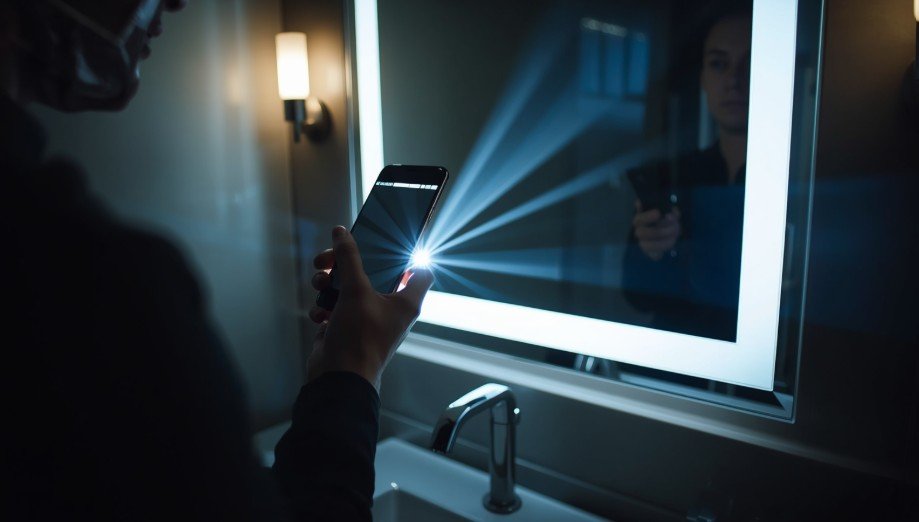
Turn off the bathroom lights and press your smartphone flashlight close to the mirror. A standard mirror usually bounces light back at you, so you should not see a room or open space behind it.
A suspicious two-way mirror may let light pass through if there is a hidden area behind the glass. Move the light around edges and corners. Look for depth, gaps, wires, holes, or strange reflections.
The Knock Test
Tap the mirror gently with your knuckles. A standard mirror mounted flat against a wall often sounds dull, solid, and short. It feels like there is firm backing directly behind it.
A mirror with open space behind it may sound hollow, sharper, or echo-like. This test is not perfect, but it adds another layer. If the mirror looks strange, sounds hollow, and fails the fingernail test, ask for help.
Does The Fingernail Test Work?
This is where smart travel beats viral travel every time.
The fingernail test can be helpful, but it is not 100% reliable. Glass professionals note that mirror styles, coatings, acrylic surfaces, vanity frames, and lighting can change the result. Some normal mirrors may look suspicious.
Use the test as a quick clue, not a final verdict. For stronger confidence, combine the fingernail, flashlight, knock, and edge checks. If multiple signs feel wrong, contact the hotel desk.
Real-Room Safety Steps
Use what is the mirror trick in hotels as part of a calm arrival routine, not a scary ritual.
Scan The Room First
Before unpacking, stand near the door. Notice the mirror placement, bathroom layout, vents, smoke detectors, lamps, alarm clocks, wall decor, outlets, and devices facing private areas. A normal hotel room should make design sense.
Then check the door lock, latch, peephole, balcony door, and connecting-room door. Many travel problems come from poor locks, loud hallways, and overlooked entry points.
Check Without Damaging Anything
Use your phone flashlight, your eyes, and a gentle tap. Avoid pulling mirrors, opening fixtures, or damaging property. If something looks off, take photos or short videos from different angles.
Call the front desk and explain calmly that the mirror or room setup makes you uncomfortable. Ask for another room. A good hotel should take privacy concerns seriously.
Before leaving early or changing plans, look out for the hotel cancellation policy so you know whether refunds, penalties, or booking changes may apply.
Trust Your Travel Instincts
Your gut feeling matters, especially in unfamiliar stays. If a room feels unsafe, exposed, poorly maintained, or strangely arranged, ask questions. You do not need dramatic proof to request a room change.
Solo travelers can also review hotel safety tips for women before arrival, especially when checking mirrors, locks, room location, and privacy risks.
Keep booking details, emergency contacts, and your phone charged. Solo travelers may also share the hotel name and room number with someone trusted after check-in.
Travel Health Checks
A safe stay should protect your body, sleep, and privacy together.
Watch Air And Cleanliness
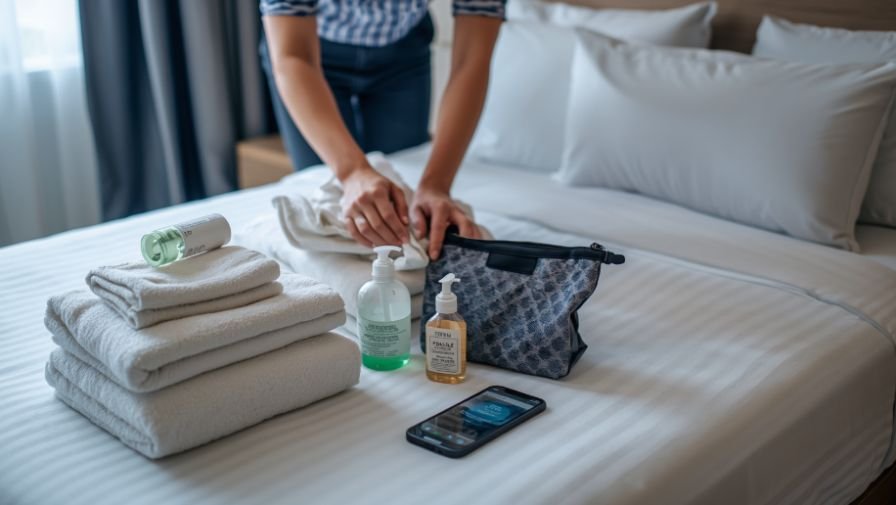
After the mirror check, notice the smell of the room. Musty air, heavy perfume, smoke, or visible mold can trigger allergies, headaches, asthma, and poor sleep. Check bedding, towels, vents, drains, and bathroom corners.
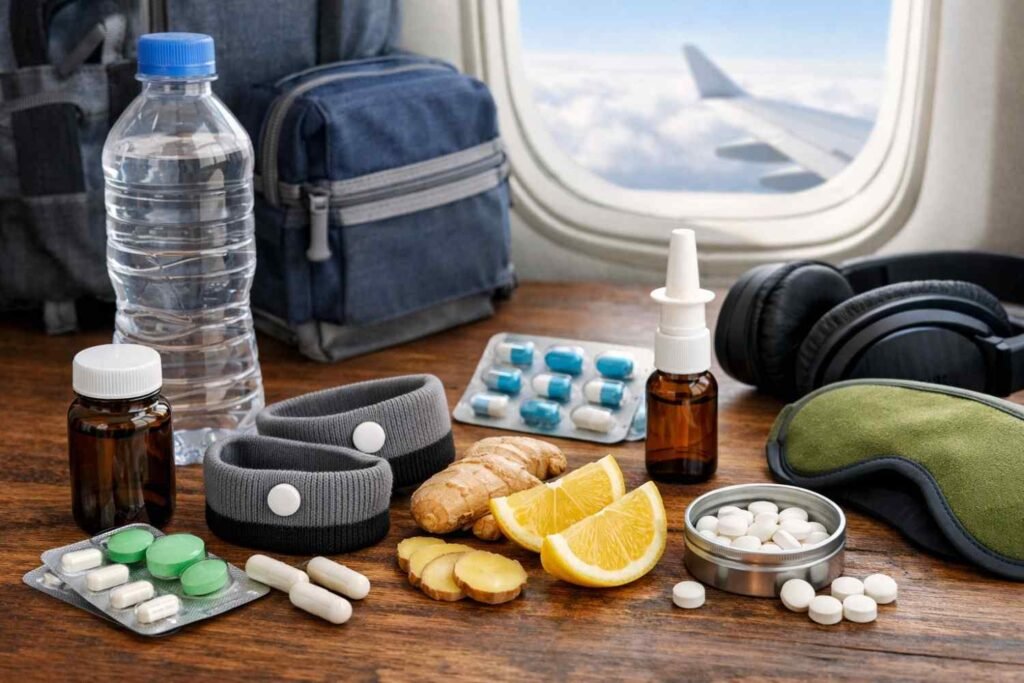
Keep medicines, hand sanitizer, hydration salts, and prescriptions easy to reach. Wipe remotes, switches, and bedside surfaces if that helps you feel comfortable. These habits can prevent common travel health annoyances.
Plan For Better Sleep
Hotel sleep can suffer from noise, light, temperature, pillows, or late check-ins. Close curtains, test the air conditioner, check door gaps, and request extra pillows before you are exhausted.
Earplugs, an eye mask, and a charger near the bed help. A well-rested traveler thinks clearly, handles concerns calmly, and enjoys the next day more.
Frequently Asked Questions
1. What Is The Mirror Trick In Hotels?
What is the mirror trick in hotels refers to a quick privacy check, usually the fingernail test, used to see whether a bathroom mirror may be standard or two-way.
2. Is The Fingernail Test Always Accurate?
No, the fingernail test is not always accurate because mirror thickness, coatings, lighting, and frame depth can affect the reflection. Use it with flashlight and knock checks.
3. What Should I Do If A Mirror Looks Suspicious?
Take photos, avoid damaging anything, call the front desk, and request another room. If you feel unsafe, leave the room and contact the booking platform immediately.
4. Can Hidden Cameras Be Near Hotel Mirrors?
Yes, cameras can be hidden near mirrors, vents, clocks, outlets, or decor. Scan private areas with a flashlight and report anything unusual to hotel staff right away.
Sleep Tight, Mirror Bright
What is the mirror trick in hotels is not about turning every trip into a detective show. It is about taking one smart minute to protect your privacy before you relax. Try the fingernail, flashlight, and knock tests, then check locks, air quality, cleanliness, and comfort. A safer stay helps you sleep better, travel lighter, and enjoy the room.