
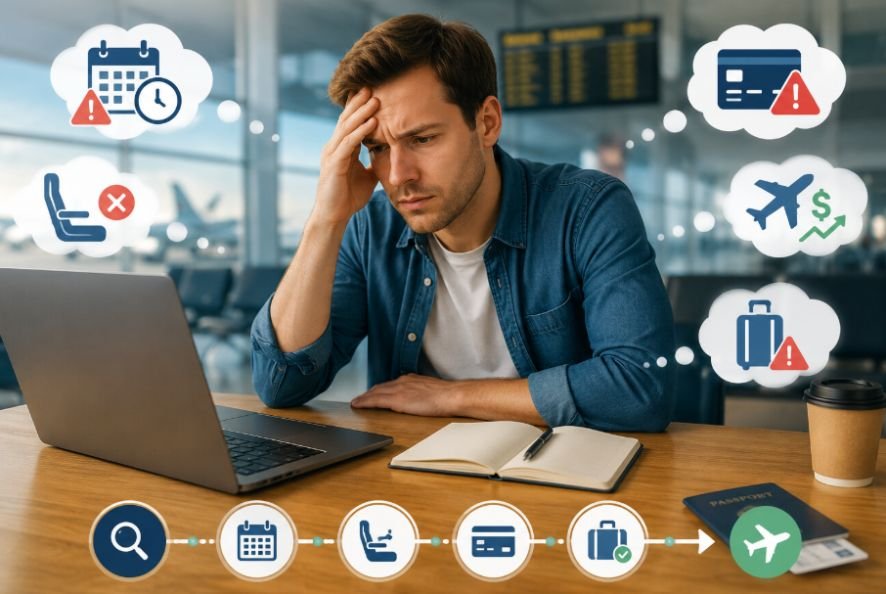
Booking a flight feels easier than ever. A few taps, a confirmation email, and you’re ready to go. Yet many travelers discover that the real challenges start after the purchase. A small typo, a restrictive fare, or a poorly planned connection can quickly turn an exciting trip into an expensive headache.
Most flight reservation mistakes aren’t dramatic. They’re small decisions made in a hurry. The good news is that they’re also preventable. A little extra attention during the booking process can save money, reduce stress, and make travel significantly smoother from departure to arrival.
Why Do Flight Reservations Deserve More Attention Than Most Travelers Give Them?

A flight ticket is more than a seat on an airplane. It’s a collection of rules, restrictions, fees, and travel requirements that affect your entire itinerary.
Many travelers focus exclusively on the advertised fare. However, airline ticket booking involves baggage policies, schedule flexibility, airport logistics, seat assignments, and fare conditions. Ignoring those details often leads to unexpected costs later.
A successful flight reservation starts with understanding the full picture rather than chasing the lowest number on the screen.
Mistake #1: Booking at the Wrong Time
Timing plays a bigger role in airfare pricing than many people realize.
One common mistake is waiting until the last minute and hoping prices will drop. Another is booking extremely far in advance when airlines haven’t released their most competitive fares yet.
For most domestic trips, the strongest booking window is typically one to three months before departure. International flights often offer better pricing when booked three to six months ahead.
If you want a deeper breakdown of timing patterns, looking out for flights that are cheapest to book can help you compare booking windows more clearly.
It’s also worth paying attention to when you shop. Airlines frequently adjust fares throughout the week, and many travelers find that midweek searches provide more competitive options than weekend browsing.
Flexible travel dates can make an even bigger difference. Shifting a trip by a day or two can sometimes produce meaningful savings without changing the overall travel experience.
Mistake #2: Focusing Only on the Lowest Fare

Cheap flight booking doesn’t always result in the lowest total trip cost.
Basic economy fares often appear attractive during the search process. However, those tickets may restrict carry-on bags, limit seat selection, prevent changes, or charge additional fees for services that standard economy includes.
Before purchasing, calculate the complete cost of the trip, including:
- Baggage fees
- Seat selection charges
- Ticket change fees
- Airport transfer expenses
- Connection-related costs
In many cases, a slightly higher fare delivers better value and greater flexibility.
Mistake #3: Entering Passenger Information Too Quickly
This is one of the most expensive flight booking mistakes because correcting it later can be difficult.
A nickname, missing middle name, typo, or incorrect travel document detail can create problems during check-in and security screening. Passenger information should always match the government-issued identification used for travel exactly. Transportation Security Administration requirements specifically emphasize matching reservation details with travel documents.
Before clicking “Buy Now,” review every passenger’s details carefully. Spending thirty extra seconds reviewing names, birth dates, and travel document information is far easier than dealing with corrections later.
Mistake #4: Ignoring Fare Rules and Cancellation Policies

Many travelers never read the fare conditions attached to their tickets.
That’s understandable because fare rules can seem tedious. Unfortunately, they often determine whether a reservation becomes a minor inconvenience or a major financial loss when plans change.
Pay attention to:
- Refund eligibility
- Change fees
- Same-day flight change options
- Travel credit policies
- Schedule change procedures
Understanding these details before purchase helps set realistic expectations if your plans shift unexpectedly.
Another often-overlooked advantage is the 24-hour cancellation period offered on many airline bookings made directly with carriers. Certain bookings can be canceled within 24 hours for a full refund when specific conditions are met.
Mistake #5: Booking Through the Wrong Channel
Third-party travel agencies can sometimes appear to offer the lowest price. The problem usually appears later.
If your flight is canceled, delayed, or needs modification, airlines frequently require travelers to work through the original booking provider. That extra layer can slow communication and complicate problem resolution.
A practical approach is to use comparison platforms to research airfare deals and route options, then complete the purchase directly through the airline’s website. This often provides clearer communication and easier access to customer support when changes occur.
Mistake #6: Overlooking Airport and Connection Logistics

Not all airports are equally convenient.
Large metropolitan areas often have multiple airports, and choosing the wrong one can add hours to your journey. The same applies to connecting flights.
A connection that looks efficient on paper may become stressful if it requires changing terminals, rechecking baggage, or navigating an unfamiliar airport during peak travel periods.
When reviewing flight ticket reservation options, consider:
- Airport location
- Connection duration
- Terminal transfers
- Immigration processing times
- Ground transportation availability
A slightly longer layover is often worth the added peace of mind.
How to Make Smarter Flight Reservations?
A few simple habits can dramatically improve your booking experience:
- Compare total trip costs rather than base fares.
- Verify passenger information before payment.
- Read the fare rules carefully.
- Monitor baggage allowances.
- Book directly with airlines whenever possible.
- Review departure and arrival airports.
- Keep booking confirmation emails organized.
- Consider schedule flexibility before purchasing.
These airline reservation tips may seem basic, but they’re often the difference between a smooth trip and an expensive lesson.
Understanding Different Types of Flight Bookings

Not every trip requires the same booking strategy.
One-way tickets work well for flexible itineraries and multi-destination travel. Multi-city reservations can simplify complex travel plans and reduce separate booking risks.
Many travelers, however, still prefer round-trip reservations because they simplify planning and often provide more predictable pricing. If you’re comparing booking options, understanding what a round-trip flight is can help you determine whether a return itinerary offers better value for your travel plans.
The best reservation type depends on your destination, flexibility needs, and overall travel itinerary.
FAQs: Flight Reservation Guide: Common Booking Mistakes and How to Avoid Them
1. When is the best time to book a flight?
Domestic flights are often best booked one to three months before departure, while international flights typically offer better pricing three to six months in advance.
2. Should I book directly with an airline?
In many cases, yes. Direct bookings often make schedule changes, cancellations, and customer service interactions easier to manage.
3. Are basic economy tickets worth it?
They can be for travelers who travel light and don’t need flexibility. However, additional fees may reduce the overall value.
4. What should I double-check before confirming a reservation?
Verify passenger names, travel dates, airport codes, baggage policies, fare rules, and contact information before completing payment.
Why Careful Booking Pays Off Long After Checkout
The most successful travelers aren’t necessarily the ones finding the absolute lowest fares. They’re the people who understand the details behind the reservation. A thoughtful booking process helps avoid unnecessary fees, missed connections, documentation issues, and stressful last-minute surprises. Every step taken before purchase creates a smoother experience once the trip actually begins.
A few extra minutes during booking can save hours of frustration later.