Long flights used to mean arriving with puffy eyes, stiff muscles, and zero energy for sightseeing. After countless airport layovers and overnight journeys, discovering the best way to sleep on a plane completely changed the travel experience. A few simple adjustments before and during a flight can help you rest comfortably, reduce jet lag, and land ready to enjoy your destination instead of searching for the nearest bed.
Key Takeaways
- Planning your sleep before takeoff improves in-flight rest.
- The right seat can make a huge difference in sleep quality.
- A sleep kit helps block common cabin distractions.
- Good posture and circulation prevent travel discomfort.
- Matching sleep with destination time reduces jet lag.
Why The Best Way To Sleep On A Plane Matters
Great trips often begin before you even land.
Nothing ruins a vacation faster than arriving exhausted after a long flight. Poor sleep can leave you feeling groggy, irritable, and less excited to explore a new city, attend business meetings, or enjoy planned activities.
The best way to sleep on a plane is not just about comfort. It helps travelers maintain energy levels, improve focus, minimize jet lag, and make the most of valuable travel time. Think of it as part of your travel strategy rather than a lucky bonus.
Create The Perfect Seat Setup
Your seat can either help or hurt your chances of sleeping.
Choose A Window Seat
A window seat remains one of the easiest ways to improve sleep on a flight. It provides a stable surface for your head and reduces interruptions from passengers needing access to the aisle.
For overnight flights, the window position also keeps you away from frequent movement in the cabin. Less disturbance means a better chance of uninterrupted rest.
Stay Away From Busy Zones
Seats near lavatories and galleys often experience more foot traffic, bright lighting, and noise throughout the flight. These distractions can repeatedly interrupt sleep cycles.
Selecting a quieter section of the aircraft can create a more relaxing environment and improve overall comfort during long-haul travel.
Use Cabin Position To Your Advantage
Whenever possible, choose seats near a bulkhead wall or locations where seat recline disturbances are reduced. Fewer bumps and movements make it easier to stay asleep once you finally drift off.
Careful seat selection is often overlooked, yet it is one of the most effective travel planning decisions for better in-flight sleep.
Build Your Travel Sleep Kit
A few lightweight accessories can transform your journey.
Block Light And Noise
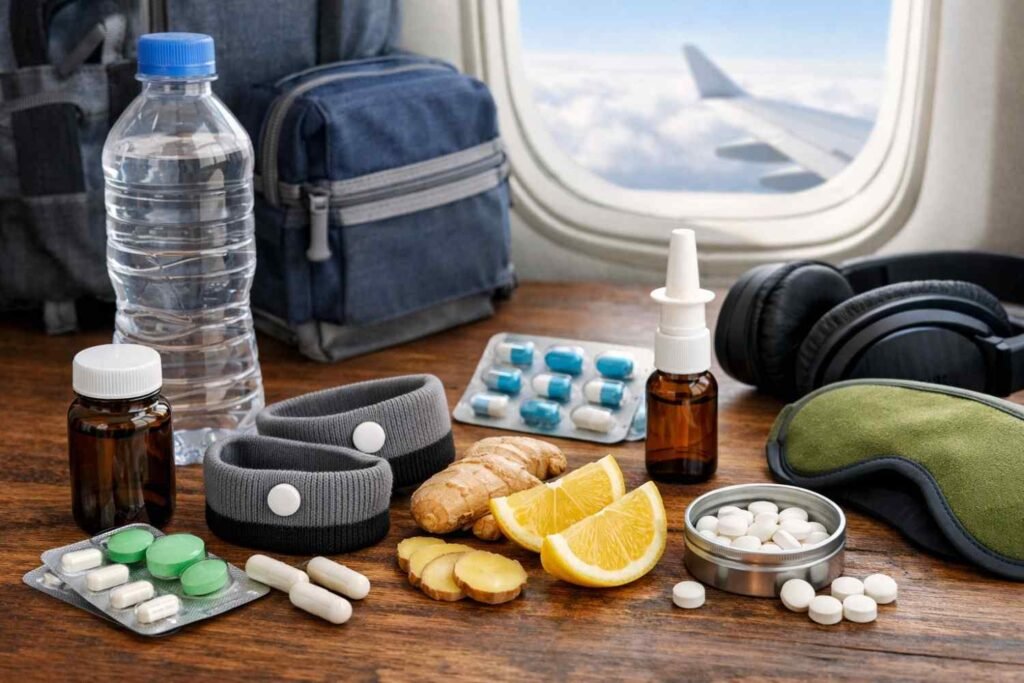
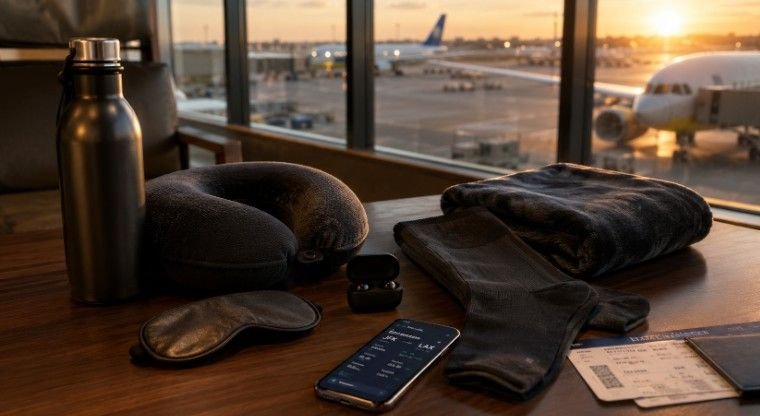
Airplane cabins contain constant distractions, from entertainment screens to cabin announcements. A contoured blackout eye mask helps create darkness while noise-canceling headphones reduce unwanted sounds.
Many experienced travelers listen to white noise, pink noise, or familiar audiobooks. Consistent background sound often helps the brain relax and focus less on surrounding activity.
Support Your Neck Properly
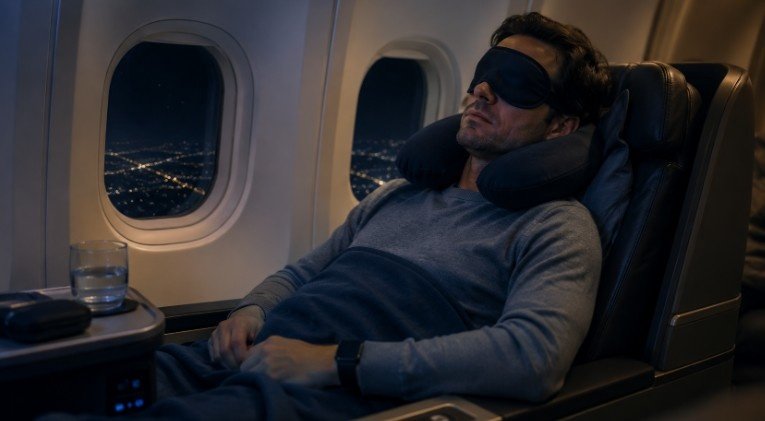
Neck support is essential during long flights. Traditional travel pillows work for some travelers, while chin-support designs offer additional stability and help prevent the head from falling forward.
Options such as memory foam neck pillows or supportive travel pillows can reduce neck strain and improve sleeping posture significantly.
Stay Comfortable In Changing Temperatures
Cabin temperatures often fluctuate throughout a journey. Wearing breathable layers allows you to adjust easily without becoming too warm or too cold.
A lightweight hoodie, blanket scarf, or travel wrap can provide additional comfort and create a cozy sleeping environment.
Improve Posture And Circulation
Comfortable sleep depends on more than closing your eyes. Follow the red eye flight survival guide for better journey.
Keep Your Legs Elevated
Allowing your feet to hang for hours may contribute to swelling and discomfort. Using a carry-on bag as a footrest can improve circulation and reduce pressure on your lower body.
Some travelers prefer inflatable foot hammocks, which help support the legs and encourage a more comfortable seating position during long flights.
Try The Tray Table Method
On flights where it is permitted and practical, partially lowering the tray table and using a soft pillow can provide additional upper-body support.
This position works particularly well for travelers who struggle to sleep while sitting upright and need an alternative resting posture.
Wear Compression Socks
Compression socks are a simple but highly effective travel accessory. They promote healthy blood flow, reduce swelling, and help prevent the stiffness commonly experienced after long periods of sitting.
For international flights and extended journeys, they can significantly improve overall comfort both during and after travel.
Adjust Habits Before And During The Flight
Small behavioral changes often create the biggest results.
Be Mindful Of What You Drink
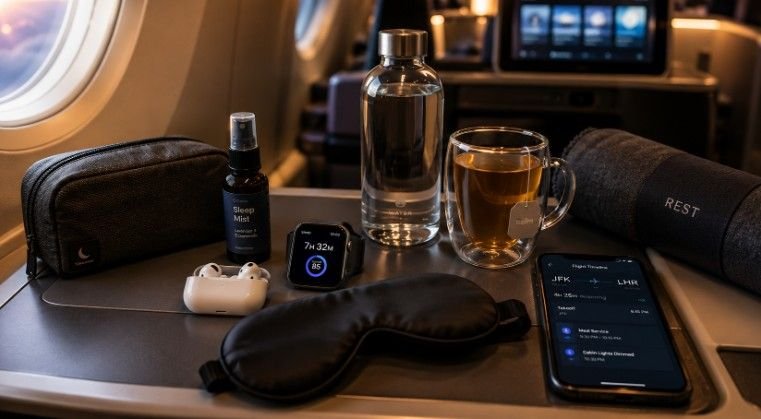
Caffeine and alcohol may seem tempting during travel, but both can interfere with sleep quality and contribute to dehydration. Instead, focus on drinking water regularly throughout the journey.
Herbal teas such as chamomile can be a soothing alternative for travelers looking to relax naturally before resting.
Sync With Your Destination Time
One of the most effective ways to reduce jet lag is to adjust your mindset as soon as you board. Set your watch or phone to your destination’s local time and begin following that schedule.
Aligning your sleep with the arrival time zone helps your body adapt faster and reduces the shock of crossing multiple time zones.
Create A Relaxing Sleep Routine
Simple bedtime signals can encourage relaxation even inside a busy aircraft cabin. Reading a few pages of a book, listening to calming audio, or practicing deep breathing can help prepare your mind for sleep.
Some travelers also find gentle aromatherapy helpful. A small amount of lavender oil applied to pulse points may create a calming association with rest.
Best Way To Sleep On A Plane Step By Step
A simple process makes sleeping easier and more predictable.
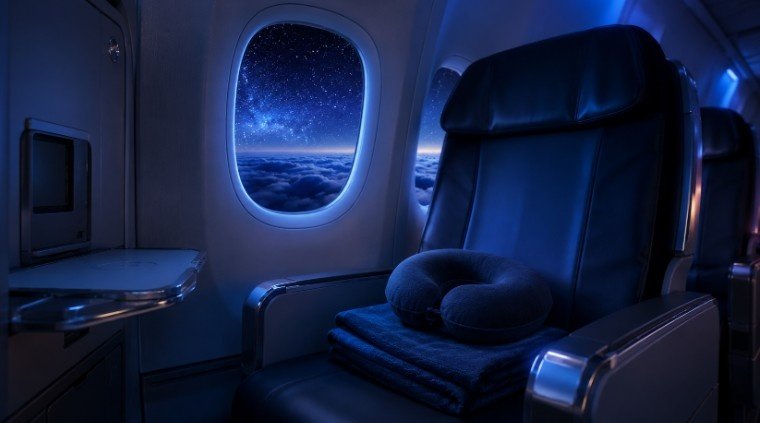
Start by selecting a window seat away from busy areas of the cabin. Wear comfortable clothing, pack a supportive travel pillow, and bring an eye mask along with noise-canceling headphones.
After boarding, adjust your watch to your destination time zone, drink water, and avoid excessive caffeine or alcohol. Settle into your seat early, organize your essentials, and create a distraction-free environment.
Recline your seat slightly when appropriate, support your neck properly, elevate your feet if possible, and focus on relaxing rather than forcing sleep. Following these steps consistently is often the best way to sleep on a plane and arrive feeling refreshed.
Frequently Asked Questions
1. Why Avoid Seat 11A On A Plane?
On certain aircraft models, seat 11A may have a restricted or poorly aligned window position. The exact issue varies by airline, but some travelers find the viewing experience less enjoyable than expected.
2. What Is The 10 5 3 2 1 Rule For Sleep?
The rule recommends avoiding caffeine ten hours before sleep, large meals three hours before, work two hours before, and screens one hour before bedtime to improve sleep quality.
3. What Is The Pillow Trick For Traveling?
The pillow trick involves using a supportive travel pillow to maintain proper neck alignment, reduce head movement, and improve comfort during long flights or extended travel periods.
4. How Do I Make Myself Fall Asleep On A Plane?
The best way to sleep on a plane is to block light and noise, stay hydrated, support your neck properly, align sleep with your destination time zone, and follow a relaxing pre-sleep routine.
Touch Down Ready To Explore
Mastering the best way to sleep on a plane can completely transform the travel experience. From choosing the right seat and packing smart sleep accessories to improving circulation and managing jet lag, every small adjustment adds up. Instead of arriving tired and sluggish, you’ll land feeling energized, comfortable, and ready to enjoy every moment of your journey from the very first day.